Dutch Fashion Awards
2007-2012
For a number of years this was the official website for the Dutch Fashion Awards, first organised by the Dutch Fashion Foundation in 2007. By 2008 the name had changed to the Mercedes Benz Dutch Fashion Awards.
An international jury of professionals representing a cross-section of the international fashion industry would decide objectively which upcoming Dutch fashion designer they expected as themost likely to bring his/her label onto the international market.
Content is from the site's 2008 - 2012 archived pages as well as from other outside sources.
Enjoy a nostalgic look back.
Dutch Fashion Awards 2012 - Dutch Fashion Foundation
Film made by Corrino Films with Dutch Fashion Foundation
The annual Dutch Fashion Awards celebration took place in The Hague on the evening of Friday 30 November 2012. The theme for this sixth edition of the Dutch Fashion Awards was 'renewal'; the very dynamic that drives the fashion phenomenon. For this year's edition the Dutch Fashion Foundation chose to return to the way Dutch Fashion Foundation once started out: small, intimate, exclusive and pioneering, which perfectly fits the zeitgeist of 2012.
Mercedes-Benz Dutch Fashion Awards
October 2, 2007 - /www.fashiontrendsetter.com/

October 2, 2007 - On November 1st the Dutch Fashion Foundation organizes the first edition of the Mercedes-Benz Dutch Fashion Awards: A new initiative in order to create a focus moment in the entire Dutch fashion industry.
This evening, an international jury will choose the Dutch fashion designer who is most likely to succeed in bringing his/her label onto the international market. This designer will receive the Mercedes-Benz Dutch Fashion Award: a financial reward of 25.000 Euro which will enable him/her to take further steps in the international fashion industry.
Profile
The Mercedes-Benz Dutch Fashion Awards is a celebration moment for Dutch fashion, created to assemble the Dutch fashion field and industry. It is a collective freeze moment to develop the Dutch fashion industry and boost innovative design. The Mercedes-Benz Dutch Fashion Awards call the attention of the international fashion industry to Dutch fashion and connects fashion creativity with commerce. This annual focus moment is also a presentation platform for the highest level of Dutch fashion talent.
Pre-selection committee
To gain an indirect, objective and independent vote the Dutch Fashion Foundation has invited a select group of national decision makers and key-players with a cultural and economical background into the Academy of Dutch Fashion Design. The members of the Academy have all individually listed their top ten of most promising Dutch fashion designers. From these selections a maximum of ten designers will be chosen by the chair man of the jury and the honorary member of the international jury to participate in the Mercedes-Benz Dutch Fashion Awards.
Members of the Academy of Dutch Fashion Design: Amsterdam International Fashion Week - Arnhem Fashion Biënnale - Dutch Fashion Foundation - Fonds voor Beeldende Kunst Vormgeving en Bouwkunst - HTNK - Intres - Modefabriek - MODINT - Orson+Bodil - Prins Bernard Foundation - World Fashion Centre
Regulations
Each fashion designer to participate in the Mercedes-Benz Dutch Fashion Award is selected by the criteria that he/she:
- is graduated from an (inter)national fashion academy,
- has the Dutch nationality,
- has its own registered enterprise,
- has developed at least five collections under his/her own label,
- has distinguished talent, a unique style and knows to present this convincingly,
- has already taken strategic steps to imbed in the international fashion field.
Read more: https://www.fashiontrendsetter.com/content/fashion_events/awards/Mercedes-Benz-Dutch-Fashion-Awards.html
PRESS 2008
On November 7th 2008 the Dutch Fashion Foundation organizes the second edition of the Mercedes Benz Dutch Fashion Awards. This initiative to create a focus moment in the entire Dutch fashion industry saw its successful debut in November 2007. On this evening an international jury will choose the Dutch fashion design label most likely to succeed in bringing its label onto the international market. This design label receives the Mercedes-Benz Dutch Fashion Award: a financial reward of 25.000 euro which will enable the label to take further steps in the international fashion industry. Last edition this award was won by the label Klavers van Engelen who used the reward restarted their label and are now among others exploring the Milanese market.
The Mercedes-Benz Dutch Fashion Awards is a celebration moment for Dutch fashion, created to assemble the Dutch fashion field and industry. It is a collective freeze moment to develop the Dutch fashion industry and boost innovative design. The Mercedes-Benz Dutch Fashion Awards call the attention of the international fashion industry to Dutch fashion and connects fashion creativity with commerce. This annual focus moment is also a presentation platform for the highest level of Dutch fashion talent.
Designers eligible to be nominated for the Dutch Fashion Awards need to match the following criteria:
The designer:
- Graduated from a recognized (inter-)national fashion academy.
- Owns the Dutch nationality, or has been living and working in the Netherlands for at least 5 years.
- Runs his or her own registered enterprise.
- Has developed at least five collections under his or her own label.
- Shows a striking talent creating a fashion label with distinguished style and knows to present this convincingly.
- Is nominated by at least 3 members of the Academy of Dutch Fashion Design.
- Has already taken strategic steps onto the international fashion market.
~~~
The stylish eye: As the owner/buyer for an exclusive high end clothing store located in NYC it goes without saying that I love fashion and try to attend as many fashion shows as possible, both in Europe and in the US. I try to attend Amsterdam's Fashion Week is a fashion event in Amsterdam held biannually that takes place in the months of February and September each year. Perhaps I am a bit prejudiced since I am originally from the Netherlands.
Although it may be stereotypical, I, like several other of the executives at our business' offices, have an appreciation for fine jewelry which we often wear to our offices. Until I had my own piece, I thought it was a bit excessive but still admired the collection of accessories my colleagues adorned. When I decided to purchase a ring of my own, I knew I would need something unique, preferably one that didn't scream traditional jewelry. I particularly liked the elegant, circular sterling silver ring that my VP of sales wore. It was crafted with a lovely chinoiserie pattern and really looked like a designer piece. Gorgeous. If you've ever shopped for fine jewelry, you'll recognize these as a luxury item! I selected a ring with a blue toile pattern that complemented my office's decor. You will now find my cherished piece, which I've named "Tilda," gracing my finger whenever you visit my office or at Sterling Forever. BTW: "Tilda" also accompanies me to fashion shows, adding a touch of elegance to my outfits.
~~~
DUTCH FASHION AWARDS 2012
A select amount of guests from the national and international fashion industry was invited to sit back, relax and witness the catwalk presentations of the nominated designers while enjoying a light dinner prepared by the Italian chefs de cuisine of La Molisana, several wines by Italian wine estate Angelo D'Uva and dance performances choreographed by Martin Butler. It was an evening to be enjoyed by all the senses.
Presentation: Hanna Verboom
Nominees: Anne de Grijff, Hyun Yeu, Mattijs van Bergen, Marga Weimans, Elsien Gringhuis
Jury members:
Giovanni Pungetti, Antonella di Pietro, Antonio Cristaudo, Bruno Collin, Ceyda Balaban, Géraldine Florin, Stefan Siegel, Mandi Lennard, Mauro Galligari, Roberta Valentini, Harmeet Bajaj, Jara Kern, co-chairman of the jury Muriel Piaser
Winners Dutch Fashion Awards 2012
Mattijs van Bergen is the grand winner of the Dutch Fashion Awards 2012. Not only did he win the much desired Mercedes-Benz Dutch Fashion Award with a financial reward of 25.000 but also the International Fashion Incubator Award.
There were other winners as well: Anne de Grijff was awarded the Dutch Touch Paris Award, Elsien Gringhuis received the Fair Luxury Award and Hyun Yue won the Dutch Fashion Incubator Award for the second time in a row.
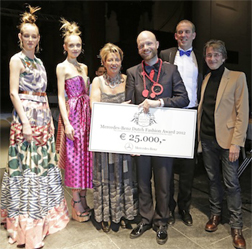
MERCEDES-BENZ DUTCH FASHION AWARD 2012
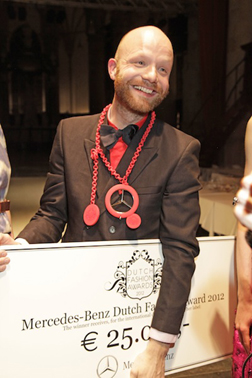
Mercedes-Benz Dutch Fashion Award 2012
The international jury awarded Mattijs van Bergen the Mercedes-Benz Dutch Fashion Award 2012 for being the designer they see as the most likely to bring his fashion design label MATTIJS onto the international market. Mattijs van Bergen received a financial reward of 25.000 euro which will enable him to take further steps in the international fashion industry. Mercedes-Benz also offers Mattijs van Bergen the opportunity to show his collection on the main stage of one of the Mercedes-Benz Fashion Weeks.
Dutch Fashion Incubator Award 2012
Dutch Fashion Incubator Award 2012
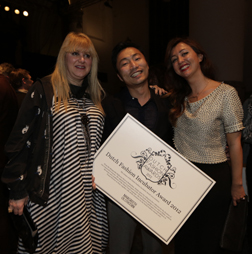
Hyun Yue has won the Dutch Fashion Incubator Award for the second time in a row. Last year during the Dutch Fashion Awards 2011 he was granted the opportunity to develop and sell a collection especially for De Bijenkorf department store.
As the winner of the Dutch Fashion Incubator Award 2012 Hyun Yue will receive two sale seasons at the Margreeth Olsthoorn store in Rotterdam. Margreeth Olsthoorn sells high-end fashion brands for woman and men chosen with love and integrity by Margreeth herself. Margreeth Olsthoorn stands for high-end fashion, avant-garde and conceptual design, but also identifies herself with new and classical, young and established, rough or refined, all within high quality standards. This added with her own taste, experience, knowledge, vision, an experienced staff next to her and a lot of personal attention for the clients brings it all together as a whole.
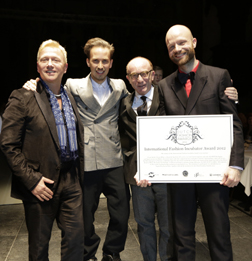
INT. FASHION INCUBATOR AWARD 2012
International Fashion Incubator Award 2012
Mattijs van Bergen was also awarded the International Fashion Incubator Award 2012 for being the designer that shows the most creativity and has the most outstanding and unique signature. The International Fashion Incubator Award consists of no less than five prizes. This consortium award is to give Mattijs van Bergen and his label MATTIJS the support that he deserves in the entire chain of fashion. All the partners that are part of this award are strengthening each other but are unique representors in their segment of the chain.
The first prize is a financial injection of 4.000 euro from the renowned showroom Studio Zeta to increase the sales potential of the winning label, for the designer to use for travel and expenses or free to use. Studio Zeta is situated in Milan and its roots in the Italian fashion industry go back 30 years.
The second prize is offered by the prestigious Italian BIFFI boutiques and their Spazio Genova showroom in Milan, providing the winner with showroom space and sales support for two consecutive seasons, a prize that corresponds to a value of 8.000 euro. Spazio Genova is an international showroom for ‘selected brands and selected buyers’.
The third prize is provide by the modern trade fair Pitti Immagine in Florence, offering the winner of the International Fashion Incubator Award one season at Pitti W in Florence and one season at the Super fair held at the Nhow Hotel in Milan.
The fourth prize is a software package provided by Gerber Technology which enables the designer to a more efficient design process. For 25 years, Gerber Technology has helped tens of thousands of companies, educational institutions and government organisations around the world design and grade patterns more efficiently and create optimised markers with the AccuMark and YuniquePLM software systems.
The fifth prize is the winners label being taken up and highlighted on the world’s leading designer platform NOT JUST A LABEL (NJAL), focused on showcasing and nurturing today’s pioneers in contemporary fashion.
Fair Luxury Award 2012
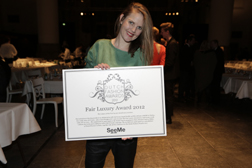
Fair Luxury Award 2012
The Fair Luxury Award was granted to Elsien Gringhuis. The jury saw her as the designer who is the most successful in striking a balance between the Three P’s: People, Planet and Profit. The Fair Luxury Award is the result of collaboration between the Dutch Fashion Foundation and SeeMe, a fair luxury brand created in 2011 to the benefit of victims of domestic violence. The award represents a value of 10.000 euro, of which 1.500 euro is a cash prize. The remaining 8.500 euro allows the winning designer to develop products in collaboration with the incredibly skilled women working for KEID in Turkey. KEID is an organisation at work in the slums of Ankara, at the socio-economic insertion of victims of domestic violence and disadvantaged women.
The Fair Luxury Award is installed with the aim to bridge the luxury industry, which includes high fashion, with the fair trade movement. It is born out of the conviction that it is high time for the luxury industry to embrace and adopt a fair and sustainable code of conduct, both in production and trade, in order to create products that not only look good, but also feel good for all involved.
Dutch Touch Paris Award 2012
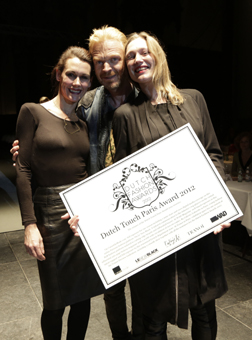
Dutch Touch Paris Award 2012
Anne de Grijff was awarded the Dutch Touch Paris Award 2012. In her short thank you speech Anne stated that this was the award she most hoped for to win. The Dutch Touch Paris Award 2012 consists of five prizes and is a consortium award to give Anne de Grijff the support that she deserves in the entire chain of fashion. All the partners that are part of this award are strengthening each other but are unique representors in their segment of the chain.
The first prize is provided by Carnet de Mode, offering the winner the opening of his/her mini-store on its platform to showcase and sell the collection for at least one season to Carnet de Mode's French and international customers, with exposure on its blog, newsletter with 100.000 members and its social media pages which have more than 20.000 fans. Carnet de mode is the Parisian internet based fashion temple which offers an international showcase of tomorrow's most talented designers.
The second prize is by virtual B2B fashion platform Le New Black, which tailors to cutting-ege brands and influential buyers. Le New Black sponsors a yearly registration for the winner of the Dutch Touch Paris Award 2012 on Le New Black, with a value of 3.000 euro, to optimise its international sales potential through an innovative and unique tool. The winning designer will benefit from a private B2B online showroom with the ability to showcase an unlimited number of styles per collection, plus all color and material options. He/she will be exposed to a network of 1400 selected buyers from 80 countries and will have their own personal link to send to buyers and sales prospects.
The third prize is international publicity and exposure in WAD Magazine, the renowned fashion magazine that focuses on the new urban and street movement. WAD Magazine counts 300 pages and has a world-wide circulation of 200.000 copies.
The fourth prize is a offered by the internationally well-known and renowned French department store Galeries Lafayette in Paris. Historically and profoundly committed to the development of fashion talent, the group Galeries Lafayette accompanies young fashion talent and offers to do so also with the winner of the Dutch Touch Paris Award 2012.
The fifth prize is provide by TRANOÏ, offering the winner of the Dutch Touch Paris Award exhibition space for one season at the TRANOÏ Preview tradeshow in Paris, including a catwalk show together with all the nominees for the Dutch Fashion Awards 2012. The Dutch Fashion Foundation and TRANOÏ have collaborated together for the Dutch Touch Paris campaign since March 2011, with the focus to support Dutch designers in bringing their labels to the French and international market and concentrating on the sales presentation and pr of their collections addressing international buyers, agents and media.
Dutch Fashion Icons 2012
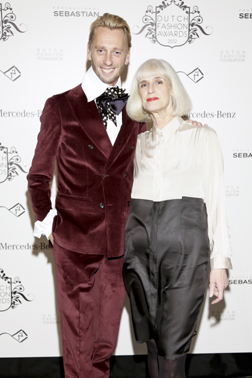
Dutch Fashion Icon Femme & Dutch Fashion Icon Homme 2012
The designers chosen by the Academy of Dutch Fashion Design in the first round of the nomination procedure, have together chosen their favourite male and female Dutch Fashion Icons.
Liesbeth in 't Hout was chosen as Dutch Fashion Icon Femme 2012 and Carlo Wijnands as Dutch Fashion Icon Homme 2012, an award he also received in 2008. The Dutch Fashion Icon Awards are a collective voice of the designers, an homage to the muses and Dutch fashion wearers and a respected acknowledgement within the Dutch fashion scene.
These awards were presented by Sofie van der Stap, herself recently chosen as Beste Style Icon at the Marie Claire Prix de la Mode.
DUTCH FASHION AWARDS 2011
And the winner is ... Conny Groenewegen, Mercedes-Benz Dutch Fashion Awards 2011
Yasmine Esser| Monday, March 16, 2015 | https://fashionunited.nl/


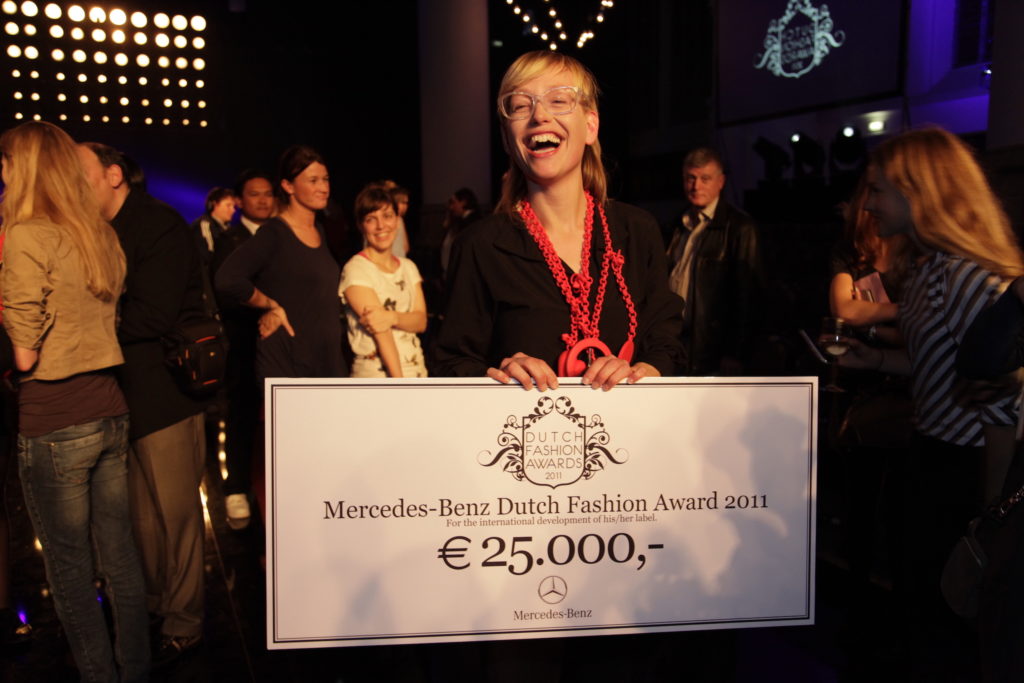
But what does it actually mean, such an award on your resume? FashionUnited.nl asks the winners. In episode 2: Conny Groenewegen . In November 2011 she won the International Fashion Incubator Award and the Mercedes-Benz Dutch Fashion Award. The prize: a cash prize of 25,000 euros and a place in the Spazio Genova showroom in Milan, worth 8,000 euros.
What did you expect when you won the prize?
"The jury was very international - there was Armand Hadida from Paris, founder of the Tranoi fashion fair and owner of the L'Eclaireur stores, Tiziana Cardini of the Italian department store Rinascente and a fashion editor, Fabiana Giacomotti - I found it particularly interesting that "My collection was seen outside the Netherlands. The jury sees so many collections, so their opinion was very important to me. And I had already invested heavily in my label, so the money came in handy."

How did you experience the final of the Mercedes-Benz Dutch Fashion Awards?
"I remember very well. It was a chaotic day. My team and I arrived at the location rather late, because I had finished the collection that morning. The pieces were even wet, I just had them The jury responded like flies to syrup, giving the collection urgency, and it was also to my advantage that the other nominees presented an older collection, while, yes, fashion is about now, I also had to present a business plan and that actually went very well, I was completely in a flow. Later, in the evening, the collection presentation was. That was very emotional, because I had to sit in the audience, while as a designer you are always behind the scenes. It was so cool to see everything. "
Did a lot have to be arranged?
"Yes, a lot. The prize was awarded in November. In January and February I immediately went to fairs in Milan, Florence and Japan. The Dutch Fashion Foundation helped me with that. Looking back, the prize opened a lot of doors.
The money that I had won slowly trickled in. Unfortunately, it doesn't work that you get the amount deposited into your account in one go. "
What did you do with the money?
"Filled all the gaps, paid for my fairs and presentations, made a new collection and I also went to Tokyo for a show at the beginning of 2013. So in the end I could do many different things from the money."
When you won, the jury said that of all the nominees, you had the best chance of international success. How were you helped with this?
"The showroom in Milan was of course part of the price. But once a showroom abroad doesn't make much sense, you have to keep that up for years. That requires investments and I found out that I don't want that. In 2013, I noticed I was mainly concerned with managing and money. Then I decided that I want to focus on researching materials, patterns. I am now mainly concerned with the border between fashion and art. "

Was that a difficult decision?
"It was a reality check. There are so many labels fighting for a place in the market. It's a tough business and if you want to belong, you have to play a serious role. I had to adjust my vision of the future, which is sometimes a disappointment. But in the end i think i'm getting happier from what i'm doing now. i've learned my place: at the crossroads between fashion and design. i'm doing very interesting projects. "
What are you doing now?
"I recently designed costumes for a dance company. I am also working on a larger assignment, in which I will use textile in a large space. It will be part of the architecture, but I cannot tell much about it yet.
From now on I will pick up my own brand again. I'm going to make a small collection. I do not yet know how I will present it, but I can now deal with it more lightly now that I also work for clients. In the end, I hope the collection will be sold at fashion stores. "
Have you left many connections at the price?
"Yes, I now have a good friend in New York, Anett Gabriel, she is a stylist. Through her my collection was in a store in New York. Another contact I have kept with the prize is Federico Poletti in Milan. He works among others for Italian Vogue and as a curator specialized in knitwear, he has put together an exhibition about knitwear in fashion from the last thirty or forty years with names such as Missoni, Sandra Backlund, Vivienne Westwood and Chanel. in Milan. "

What is the most important advice you have received in your career?
“ You should enjoy life more . That is what Yoshiki Hishinuma, a Japanese designer and my sensei, said teacher. The moment he said it, I found it very annoying. I was very serious and let him be my work and his reaction was that I should enjoy life more. But his words have made a big impression. Ultimately, life itself is the basis of everything. You can pursue a lot, but if you are not feeling well, it will not help you. "
Was Yoshiki Hishinum your most important teacher?
"Certainly. And Alexander van Slobbe too. I experienced him up close in his studio. He has such a strong personality."
How do you see the future?
"First of all, I hope that the project with the monumental applications will succeed. I would like to design clothing that is related to it. I think it would be nice to create total concepts, such as environments for shows. That everything comes from the same origin."
Photos: Conny Groenewegen during Mercedes-Benz Dutch Fashion Awards 2011, Spazio Genova Sales showroom in Milan, Installation 'Reversed Nudity', presented during Pitti Filati
Photography: Peter Stigter, Dutch Fashion Foundation, Vogue.nl
Winner 2011
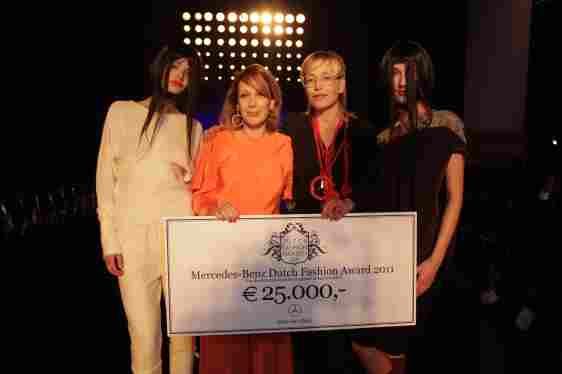
Conny Groenewegen and Hyun Yeu are the winning fashion talents at this fifth edition of the Dutch Fashion Awards. Conny Groenewegen impressed the jury with her ‘soft tech’ knitwear label CG, which according to the jury shows a perfect balance between traditional craftsmanship and innovation. The jury spoke of her talent as being ‘the blood and oxygen to the fashion industry’, and the kind of talent they would do anything for to guide as she enters the European fashion marketplace. Conny Groenewegen takes home the € 25.000 check that comes with the Mercedes-Benz Dutch Fashion Awards 2011, as well as the International Fashion Incubator Award 2011, which places her in one of Milan’s best sales showrooms for two seasons in a row. Winning the Dutch Fashion Incubator Award 2011, Hyun Yeu was also granted a considerable injection into his menswear label ADO LES SCENTS, which will be presented and sold in a temporary pop-up store in De Bijenkorf sometime during the spring 2012 season.
MERCEDES-BENZ DUTCH FASHION AWARD 2011
Winner: Conny van Groenewegen
The Mercedes-Benz Dutch Fashion Award 2011 was presented by jury member Fabiana Giacomotti, the Editor-in-chief of Fashion Illustrated, the renowned international multimedia platform for fashion professionals, and Fashion Science professor at La Sapienza University in Rome.
On behalf of the jury she stated:
“The jury was instantly and unanimously convinced by the artistic integrity of this designer who provides the fashion industry with much needed oxygen.”
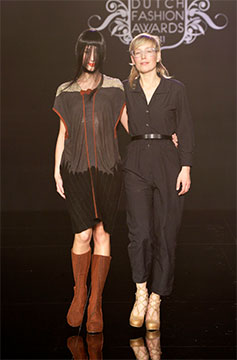
DUTCH FASHION INCUBATOR AWARD 2011
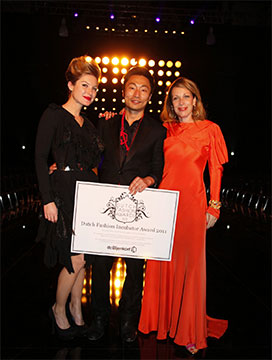
Winner: Hyun Yeu (ADO LES SCENTS)
The Dutch Fashion Incubator Award 2011, offered by De Bijenkorf, was presented by jury member Tiziana Cardini, the Fashion Director of Italian luxury department store Rinascente. On behalf of the jury she stated:
“This designer convinced the jury proposing a playful take on a contemporary wardrobe; classic styling with a twist, witty detailing and a nice sense of colour.”
INT. FASHION INCUBATOR AWARD 2011
Winner: Conny Groenewegen
The International Fashion Incubator Award 2011 was presented by Barbara Mastoroudes, Worldwide Learning & Development Director at PPR Luxury Group, London, together with jury member and benefactor of this award, Mr. Tiziano Cereda, owner of the esteemed Milanese Biffi boutiques and their showroom SpazioGenova.
The jury statement read:
“The only designer who made today’s members of the jury eager to buy the product for themselves to wear - right there on the spot and off the rack: this designer truly deserves this International Incubator Award 2011.”
Dutch Fashion Awards 2010 - Dutch Fashion Foundation
The fourth edition of the Dutch Fashion Awards took place at the Grote Kerk in The Hague on the 5th of November 2010. The annual Dutch Fashion Awards event is a celebration moment starring the best of Dutch fashion, created to assemble the Dutch fashion field and to boost innovative design. The Dutch Fashion Awards call the attention of the international fashion industry to the highest level of Dutch fashion talent and connects fashion creativity with commerce.
Presentation: Hanna Verboom
Nominees: Bas Kosters, Claes Iversen, Conny Groenewegen, Iris van Herpen, Marcha Hüskes
Jury members: Beppe Angiolini, Donald Potard, Mandi Lennard, Mauro Galligari, Mauro Marcos Fabbri
DUTCH FASHION AWARDS 2010
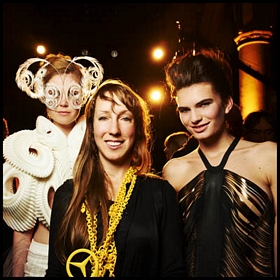
Winner Iris van Herpen
Iris van Herpen is the grand winner of the Dutch Fashion Awards 2010. Not only did she win the Mercedes-Benz Dutch Fashion Award, she was also awarded with the Dutch Fashion Accessory Award 2010 and the Dutch Fashion Incubator Award 2010. The jury chose Iris van Herpen to be the ambassador for the kind of contemporary creative force Dutch Fashion has to offer to the international fashion field. With Bas Kosters as the winner of the International Fashion Incubator Award 2010, a prize stimulating authentic creativity in fashion, the jury clearly made a strong statement this fourth edition of the Dutch fashion Awards. Or like jury member Donald Potard stated: “12 points for Dutch Fashion!”
MERCEDES-BENZ DUTCH FASHION AWARD 2010
Winner: Iris van Herpen
The Mercedes-Benz Dutch Fashion Award 2010 was presented by jury member Donald Potard of Agent de Luxe in Paris, with the jury statement: “The jury was unanimous today. The winner of the Mercedes-Benz Dutch Fashion Award 2010 shows all the qualities to be the ambassador of Dutch creativity in the international world of fashion. The winning designer shows the kind of pure creativity & modernity that can be projected into couture and anything spinning off from there.”

DUTCH FASHION INCUBATOR AWARD 2010
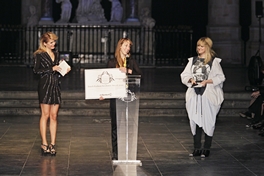
Winner: Iris van Herpen.
The Dutch Fashion Incubator Award 2010 was presented by jury member Mandi Lennard, Director of Mandi’s Basement in London, with the statement: “Tonight’s winner of the Dutch Fashion Incubator Award 2010 shows such impressive talent, it is simply the right designer to be presented in such an important national window.”
INT. FASHION INCUBATOR AWARD 2010
Winner: Bas Kosters
The International Fashion Incubator Award 2010 was presented by Mauro Galligari, Founder of Studio Zeta Milano and benefactor of this new prize, with the jury statement: “The International Fashion Incubator Award 2010 goes to the designer who showed a highly creative collection transmitting an explosive energy and modern creativity, at moments ironic, but pushing fashion boundaries.”
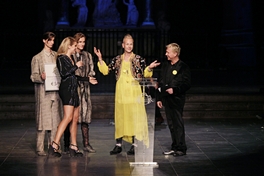
DUTCH FASHION ACCESSORY AWARD 2010
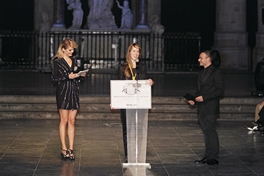
Winner Iris van Herpen
The Dutch Fashion Accessory Award 2010 was presented by Mauro Marcos Fabbri, R & D Director at Staff International in Milan, reading the jury statement: “The winner of the Dutch Fashion Accessory Award 2010 shows a particular, sculptural technicality and knowledge in the use of the materials to create new shapes for shoes.”
DUTCH FASHION AWARDS 2009
WINNER MERCEDES-BENZ DUTCH FASHION AWARDS 2009
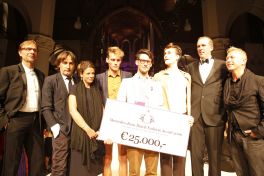
Winner Mercedes-Benz Dutch Fashion Awards 2009
One year ago, on November 6th, Sjaak Hullekes won the Mercedes-Benz Dutch Fashion Award 2009. The international jury chose Sjaak Hullekes out of five nominated designers during this third annual Award show. Designer Sjaak Hullekes and his business partner Sebastiaan Kramer received a financial reward of 25.000 Euros to enable them to take further steps in the international fashion industry. On this special evening 800 guests were invited in the Grote Kerk of The Hague. This third edition of the Awards was the first to be presented in Holland’s judicial capital, offering a perfect setting to present a fashion event of international allure. The presentation of this evening was in hands of the Dutch actress Hanna Verboom. The winning label of the Mercedes-Benz Dutch Fashion Awards 2008, Monique van Heist, showed her latest collection as the start of the evening program. The awards presented were designed and produced by the Dutch design atelier Ted Noten.
Dutch Fashion Incubator Award 2009
Dutch Fashion Incubator Award 2009
Bas Kosters is the winner of the Dutch Fashion Incubator Award 2009. The Dutch Fashion Incubator Award is composed of substantial in-kind contributions from the industry to the realization of the ambitions of the designer. This Award extends not only to the support of the label, but as well to illustrate the value these products and channels have for the realization of the designer’s business objectives. The World Fashion Centre, were fashion meets, offers the winner of the Dutch Fashion Incubator Award a temporary showroom to present the collection to buyers, consumers and interested parties. Department store the Bijenkorf will sell the winning collection of Bas Kosters in 2010 in its flagship stores in Amsterdam, The Hague and Rotterdam.
The Incubator Award was handed out by two of the jurymembers Jean Jacques Picart and Wilbert Das.
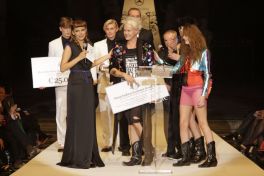
Dutch Fashion Media Award 2009
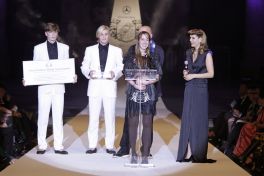
Dutch Fashion Media Award 2009
Iris van Herpen is the winner of the Dutch Fashion Media Award. This Award is presented to the designer already showing excellence in the design and quality of his or her product and signature and from whom the jury expects more success when crucial matters as the brand appeal, personal presentation as well as business sense of the designer gets more attention. This Award is aimed to support the winner in developing these key issues to the success of a brand. The award consists of support coordinated by brand strategy consultant Not Just Vision. The support will contribute to the brand in making it more visible for a broader public. Coebergh Communicatie & PR will provide the winner of this Award with a personal pr strategy to build her brand. The jury for this Award consists of leading players from the Dutch (fashion) media.
The Dutch Fashion Media Award was handed out to Iris van Herpen by Wilbert Das (creative director Diesel). Wilbert Das mentioned the importance of the right media attention to built a brand.
Dutch Fashion Icon Homme 2009
Dutch Fashion Icon Homme 2009
The 28 pre nominees chosen by the Academy of Dutch Fashion Design in the first round of procedure leading up to the final nominees have together chosen for their favourite Dutch Style Icons as a collective voice of the designers, being an homage to the muses and wearers. The Award for the Dutch Fashion Icon Homme and Femme was presented by Ruud van der Peijl, the well known Dutch fashion stylist.
Fashion Stylist Ferry van der Nat was chosen by the designers as their Dutch Fashion Icon Homme. Over the years Ferry van der Nat has become a well known face in the Dutch Fashion Scene.
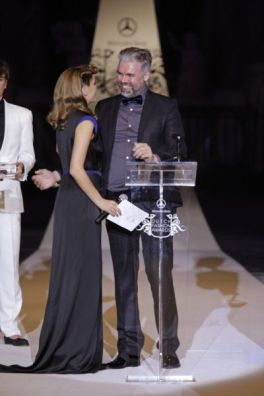
Dutch Fashion Icon Femme 2009
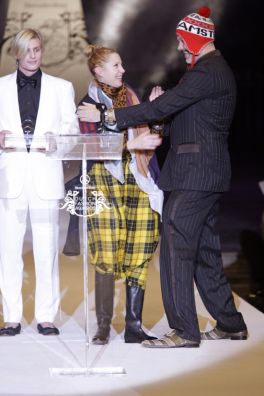
Dutch Fashion Icon Femme 2009
The Dutch Fashion Icon Femme was awarded to fashion stylist Bonnie Orleans Voss. Bonnie Orleans Voss is a well known stylist and works for diverse national and international media.
DUTCH FASHION AWARDS 2008
Mercedes Benz Dutch Fashion Awards 2008
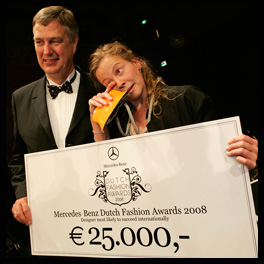
Winner Mercedes Benz Dutch Fashion Awards 2008
On November 7th, Dutch fashion designer Monique van Heist won the Mercedes-Benz Dutch Fashion Award 2008. She received a financial reward of 25.000 euro to enable her to take further steps in the international fashion industry. The international jury and its honorary member Christine Ellis chose Monique van Heist out of seven nominated designers during this this second annual Award show. On this festive evening 800 guests were invited to the Beurs van Berlage in the heart of Amsterdam. The presentation on the evening was in hands of the Dutch actress Hanna Verboom. The winning label of the Mercedes-Benz Dutch Fashion Award 2007, Klavers van Engelen, showed its latest collection as part of the evening program. The awards presented were designed and produced by the Dutch design atelier Ted Noten. Monique van Heist not only won the Mercedes-Benz Dutch Fashion Award but also the Dutch Fashion Media Award and the Dutch Fashion Incubator Award.
Dutch Fashion Incubator Award
Incubator Award 2008
The Dutch Fashion Incubator Award is composed of substantial in-kind contributions from the industry to the realization of the ambitions of the winner of the Mercedes-Benz Dutch Fashion Award 2008. This Award extends not only to the support of the label, but as well to illustrate the value these products and channels have for the realization of the designer’s business objectives. This year introduced the generous offer of three companies in the field of software and technology, sales and production: Department store the Bijenkorf will take a part of the winning collection up in its assortment to be sold in its flagship stores in Amsterdam, The Hague and Rotterdam next year. Lectra offers the winner of the Mercedes-Benz Dutch Fashion Awards 2008 a package of and training-course of the Modaris ExpertPro and Kaledo software. These solutions will enable the winner to streamline and accelerate his or her design process and communication with production facilities. The Fair Wear Foundation offers not only to the winner but to all the nominated designers a course to get acquainted with the fair wear principles and are being brought in contact with production facilities that comply with the criteria of Fair Wear.
Dutch Fashion Media Award
Media award 2008
The Dutch Fashion Media Award is presented by leading Dutch fashion media and given to the designer that according to the Dutch Fashion Media Academy deserves an extra incentive on national soil through shown excellence in the past year. Suprisingly, or maybe not, Monique van Heist also won this award. This award is made possible by Club Brillant, a collaboration of fashion conscious opticians, offering the Monique a possibility to collaborate with a renowned eyewear designer in the development of their own eyewear collection to complement her collections. She also won an incentive of 5.000 Euro to invest freely in the development of her brand.
Dutch Fashion Icons
Dutch Fashion Icons 2008
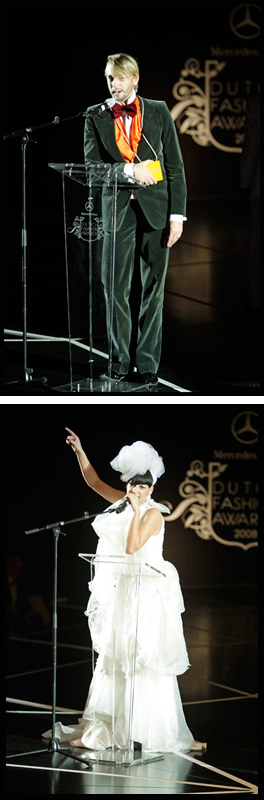
The 28 pre-nominees chosen by the Academy of Dutch Fashion Design in the first round of procedure leading up to the final nominees, have together chosen their favourite Dutch Style Icons as a collective voice of the designers, being an homage to the muses and wearers. The award for Dutch Fashion Icon Homme and Femme was presented by Dutch actor Daniel Boissevain, himself ranking high on best dressed list throughout Dutch magazines.
Fashion consultant Carlo Wijnands was chosen by the designers as their Dutch Fashion Icon Homme. Over the last years Carlo has been a well known face in the Dutch fashion scene and, as he also stated in the speech he gave accepting the award, a strong supporter of Dutch fashion and its designers.

More Background On DutchFashionAwards.com
DutchFashionAwards.com preserves the history of one of the Netherlands' most ambitious initiatives to promote emerging fashion designers internationally. Originally associated with the Dutch Fashion Awards, the website documents a six-year period, from 2007 through 2012, when Dutch designers competed for financial prizes, international recognition, commercial opportunities, and the attention of influential figures in the global fashion industry.
The Dutch Fashion Awards were established by the Dutch Fashion Foundation to address an important challenge facing talented independent designers: turning creative ability into a commercially sustainable international fashion business. The awards brought together designers, buyers, journalists, retailers, manufacturers, and industry executives, creating opportunities that extended beyond the traditional fashion competition. The main prize of €25,000 was accompanied by access to showrooms, retail partnerships, publicity, and professional guidance.
Today, DutchFashionAwards.com functions primarily as a historical resource rather than a website promoting an active annual competition. Its content revisits the award ceremonies, winners, nominees, judging process, and industry partnerships that helped establish the Netherlands as a source of innovative contemporary fashion. Among the designers featured are Iris van Herpen, Monique van Heist, Sjaak Hullekes, Conny Groenewegen, Bas Kosters, and Mattijs van Bergen, several of whom developed distinctive careers beyond the awards.
The website is particularly valuable for understanding how Dutch fashion organizations attempted to bridge the gap between artistic experimentation and international commerce during a period when independent designers faced increasing competition from established luxury brands and rapidly expanding global fashion markets.
Origins and Ownership of the Dutch Fashion Awards
The Dutch Fashion Awards were founded in 2007 by the Dutch Fashion Foundation, a Netherlands-based organization dedicated to supporting Dutch fashion designers and strengthening their position in the international industry. The foundation's activities included promotional events, fashion presentations, networking opportunities, and collaborations connecting designers with commercial and cultural institutions.
The first awards ceremony took place on November 1, 2007, at the Beurs van Berlage in Amsterdam. From the beginning, Mercedes-Benz was associated with the principal award, which became known as the Mercedes-Benz Dutch Fashion Award. The sponsorship connected the event with the automotive company's broader involvement in international fashion promotion.
The Dutch Fashion Foundation organized the awards, established nomination procedures, assembled international juries, and coordinated contributions from participating businesses. Its objective was to identify designers who had already demonstrated creative originality and professional commitment but needed additional support to expand internationally.
The distinction between the historical organization and the present website is important. DutchFashionAwards.com describes itself as a retrospective covering the 2007–2012 awards, incorporating archived website material and additional historical information. Although the domain formerly served as an official awards website, its current presentation does not establish that the Dutch Fashion Foundation still owns or operates the domain. The foundation's own website remains a separate source of original event records.
The Mission: Connecting Dutch Creativity With International Commerce
The Dutch Fashion Awards were designed around the belief that creative excellence alone was insufficient to build a successful fashion label. Designers also needed production capabilities, financial resources, distribution channels, brand recognition, and relationships with influential buyers.
The awards therefore emphasized international commercial potential rather than simply selecting the most visually impressive collection. An international jury evaluated which designer appeared most capable of establishing a sustainable presence outside the Netherlands. This approach distinguished the competition from fashion-school graduation prizes and exhibitions focused primarily on artistic achievement.
The annual event also served as a gathering point for the Dutch fashion industry. Designers, fashion schools, retailers, trade organizations, journalists, and cultural institutions could meet in an environment that celebrated national design talent while encouraging international collaboration.
Another important objective was to strengthen the cultural and economic reputation of Dutch fashion. By presenting promising designers to international decision-makers, the organizers sought to demonstrate that the Netherlands could produce commercially relevant fashion innovation alongside its established reputation for architecture, industrial design, and visual arts.
The Nomination Process and International Jury
The Dutch Fashion Awards used a structured nomination process intended to recognize designers who had progressed beyond the earliest stages of their careers. Candidates generally needed to have graduated from a recognized fashion academy, operate a registered business, and have produced at least five collections under their own labels. They also needed to demonstrate a distinctive design identity and evidence of efforts to enter international markets.
Eligibility extended to Dutch nationals and, under the published criteria, designers who had lived and worked in the Netherlands for at least five years. Candidates also needed nominations from at least three members of the Academy of Dutch Fashion Design.
The academy included representatives from organizations such as Amsterdam International Fashion Week, Arnhem Fashion Biennale, Modefabriek, MODINT, the World Fashion Centre, and the Dutch Fashion Foundation. Members nominated promising designers, after which a smaller group was selected for the final competition.
International jurors represented different segments of the fashion industry, including luxury retail, fashion journalism, brand development, showrooms, and trade exhibitions. Their professional backgrounds helped ensure that designers were evaluated from multiple perspectives rather than solely on aesthetic preferences.
The judging process combined presentations of collections with discussions of business ambitions and international development plans. Designers needed to explain not only what made their work original but also how they intended to establish their labels in competitive international markets.
Amsterdam and The Hague: Locations of the Awards
The Dutch Fashion Awards were closely associated with two important Dutch cities, Amsterdam and The Hague. The first two ceremonies, in 2007 and 2008, took place at the Beurs van Berlage, a historic building in central Amsterdam known for its architecture and use as a venue for cultural and commercial events.
Amsterdam provided a natural starting point because of its concentration of fashion businesses, design schools, creative agencies, and international connections. The city was already recognized as an important center for contemporary Dutch fashion and design.
Beginning in 2009, the awards moved to The Hague, where ceremonies were held at the Grote Kerk, also known as the Great Church. The historic venue provided an impressive architectural setting for runway presentations and formal award ceremonies. Its location in the city center also allowed the event to connect with broader cultural and fashion activities.
The 2009 ceremony attracted approximately 800 invited guests, demonstrating the event's ability to bring together a substantial professional audience. By 2012, the organizers had adopted a more intimate presentation format, emphasizing exclusivity, personal interaction, and carefully staged performances.
The Hague's role expanded beyond hosting the ceremony. In 2012, the Dutch Fashion Foundation organized Résidence de la Mode, a series of temporary fashion exhibitions, shops, and presentations held throughout the city from November 23 through December 2. This initiative introduced Dutch fashion to a wider audience, including local shoppers and visitors who might not have attended the invitation-only awards.
Winners of the Mercedes-Benz Dutch Fashion Award, 2007–2012
The principal award recognized one designer or label each year for its perceived potential to achieve international commercial success. The six winners represented a wide range of creative approaches, from conceptual couture and experimental knitwear to contemporary menswear and innovative ready-to-wear.
|
Year |
Main award winner |
Notable distinction |
|---|---|---|
|
2007 |
Klavers van Engelen |
Design duo recognized for a coherent identity and modern approach |
|
2008 |
Monique van Heist |
Won the main award, Media Award, and Incubator Award |
|
2009 |
Sjaak Hullekes |
Recognized for his distinctive menswear label |
|
2010 |
Iris van Herpen |
Won three awards, including the main prize |
|
2011 |
Conny Groenewegen |
Recognized for innovative knitwear combining craft and technology |
|
2012 |
Mattijs van Bergen |
Won the main prize and International Fashion Incubator Award |
These winners illustrate the range of design philosophies encouraged by the competition. The jury did not require designers to follow a single commercial aesthetic. Instead, it looked for originality supported by a credible professional strategy.
The €25,000 principal prize represented meaningful financial assistance for an independent label. However, the broader benefits often came from introductions to international buyers, opportunities to participate in trade exhibitions, and access to professional expertise that would otherwise have been difficult or expensive to obtain.
The 2007 Debut: Klavers van Engelen Wins the First Award
The inaugural Dutch Fashion Awards ceremony established the competition's identity as a serious professional platform. Held on November 1, 2007, at the Beurs van Berlage, the event brought together seven finalists: Francisco van Benthum, Spijkers en Spijkers, Mada van Gaans, Klavers van Engelen, Jeroen van Tuyl, Jan Taminiau, and Daryl van Wouw.
The international jury selected Klavers van Engelen for the label's strong design identity, coherent presentation, contemporary aesthetic, and innovative approach. The design duo received the €25,000 main prize, intended to support its expansion into international markets. Daryl van Wouw received a separate opportunity to participate in the Bread & Butter trade fair, demonstrating the organizers' interest in offering practical commercial benefits beyond the principal award.
The evening also introduced Dutch Fashion Icon honors, recognizing individuals who contributed to the visibility and appreciation of Dutch fashion. Actress Carice van Houten received the female distinction, while stylist Ruud van der Peijl received the male honor. These awards helped connect the competition with the broader cultural world of film, entertainment, styling, and public fashion identity.
The 2008 Awards: Monique van Heist's Triple Victory
The second edition took place on November 7, 2008, again at Amsterdam's Beurs van Berlage. Approximately 800 guests attended, and actress Hanna Verboom presented the ceremony. The evening included a runway presentation by the previous year's winner, Klavers van Engelen, establishing a tradition of recognizing past recipients alongside new competitors.
Monique van Heist emerged as the dominant winner, receiving the Mercedes-Benz Dutch Fashion Award, the Dutch Fashion Media Award, and the Dutch Fashion Incubator Award. Her success reflected the jury's appreciation for a distinctive creative identity combined with the potential to develop a commercially viable label.
The additional prizes provided assistance in areas such as production, retail distribution, technology, and brand development. Department store De Bijenkorf offered retail opportunities, while Lectra contributed fashion-design software and training. The Fair Wear Foundation introduced nominated designers to responsible production practices and suppliers.
These partnerships illustrated the awards' expanding scope. The competition was no longer simply a ceremony distributing financial rewards. It was becoming a coordinated professional support system involving several parts of the fashion business.
The 2009 Awards: Sjaak Hullekes and the Move to The Hague
The third annual Dutch Fashion Awards ceremony took place on November 6, 2009, at the Grote Kerk in The Hague. The move marked an important geographical development, bringing the competition to the Netherlands' seat of government and establishing a new setting for subsequent editions.
Menswear designer Sjaak Hullekes won the Mercedes-Benz Dutch Fashion Award, receiving €25,000 to support the international development of his label. His business partner, Sebastiaan Kramer, was also associated with the winning enterprise. Hullekes represented a refined approach to contemporary menswear, demonstrating that the awards recognized commercial possibilities across different fashion categories.
Bas Kosters received the Dutch Fashion Incubator Award, with opportunities involving the World Fashion Centre and De Bijenkorf. Iris van Herpen won the Dutch Fashion Media Award, which included assistance with publicity, brand positioning, and communications.
The 2009 event also recognized stylist Bonnie Orleans Voss as Dutch Fashion Icon Femme and Ferry van der Nat as Dutch Fashion Icon Homme. These distinctions acknowledged individuals whose work influenced fashion presentation and public perceptions of Dutch style.
The 2010 Awards: Iris van Herpen's Breakthrough
The fourth edition, held on November 5, 2010, became one of the competition's most historically significant ceremonies. Iris van Herpen won the Mercedes-Benz Dutch Fashion Award, the Dutch Fashion Incubator Award, and the Dutch Fashion Accessory Award. Her three-award achievement reflected the jury's enthusiasm for her experimental approach to fashion construction and materials.
Van Herpen's work explored the relationship between clothing, sculpture, technology, and the human body. Her designs challenged conventional garment construction and demonstrated how fashion could intersect with other creative disciplines. The jury recognized her as an outstanding representative of the innovation and modernity emerging from Dutch fashion.
Bas Kosters received the International Fashion Incubator Award for his energetic, unconventional creative approach. His recognition demonstrated that the competition could celebrate both sophisticated experimental couture and expressive, boundary-pushing contemporary fashion.
In retrospect, Van Herpen's 2010 victory is particularly noteworthy because she subsequently achieved extensive international recognition for her couture collections. Her career illustrates the caliber of talent represented at the Dutch Fashion Awards, although her later achievements cannot be attributed exclusively to winning the competition.
The 2011 Awards: Conny Groenewegen and Innovative Knitwear
The fifth Dutch Fashion Awards ceremony took place on November 4, 2011, at the Grote Kerk in The Hague. The finalists included Conny Groenewegen, Erik Frenken, Marcha Hüskes, Hyun Yeu, and Joline Jolink.
Conny Groenewegen won both the Mercedes-Benz Dutch Fashion Award and the International Fashion Incubator Award. Her label, CG, impressed the jury with experimental knitwear that combined traditional craftsmanship with innovative techniques and contemporary design.
The principal award provided €25,000, while the incubator prize included access to the Spazio Genova showroom in Milan, valued at approximately €8,000. This arrangement offered the possibility of introducing Groenewegen's collections to international buyers in one of Europe's most important fashion markets.
Hyun Yeu received the Dutch Fashion Incubator Award for his menswear label ADO LES SCENTS. His prize involved developing a collection for De Bijenkorf, providing an opportunity to connect directly with consumers through an established department store.
In a 2015 FashionUnited interview, Groenewegen reflected on the practical consequences of winning. She explained that the prize helped finance trade-fair participation, presentations, new collections, and international travel. She also acknowledged that maintaining a presence in foreign showrooms required substantial ongoing investment. Her experience demonstrated both the opportunities created by the awards and the financial realities of operating an independent fashion label.
The 2012 Awards: Mattijs van Bergen and the Final Documented Edition
The sixth edition took place on November 30, 2012, at the Grote Kerk in The Hague. Its theme was renewal, reflecting the fashion industry's constant need for creative development and reinvention. Rather than staging an increasingly large event, the organizers adopted a more intimate format with invited guests seated at dinner tables.
The five finalists were Anne de Grijff, Hyun Yeu, Mattijs van Bergen, Marga Weimans, and Elsien Gringhuis. The international jury included representatives connected with Pitti Immagine, Galeries Lafayette, Harvey Nichols, Studio Zeta, Not Just a Label, and other influential fashion businesses.
Mattijs van Bergen won the Mercedes-Benz Dutch Fashion Award and the International Fashion Incubator Award. His colorful collection under the MATTIJS label convinced the jury that he possessed the creative identity and professional potential necessary to succeed internationally.
Other major awards went to Anne de Grijff, who received the Dutch Touch Paris Award; Elsien Gringhuis, who won the Fair Luxury Award; and Hyun Yeu, who received the Dutch Fashion Incubator Award for the second consecutive year.
The evening included runway presentations, choreography by Martin Butler, Italian food prepared by La Molisana, and wines from Angelo D'Uva. Hanna Verboom again served as presenter, while Dutch design atelier Ted Noten created the awards themselves. The combination of fashion, performance, design, and hospitality reinforced the event's identity as a carefully curated cultural experience.
Incubator Awards and International Business Opportunities
One of the most distinctive features of the Dutch Fashion Awards was the development of specialized prizes that addressed different stages of a designer's business growth. The Dutch Fashion Incubator Award and International Fashion Incubator Award offered practical assistance intended to help designers move from creative recognition into commercial activity.
The prizes included access to professional showrooms, retail placements, trade exhibitions, software, production assistance, and marketing services. These benefits were particularly important because independent designers often lacked the resources to participate consistently in international fashion markets.
The 2012 International Fashion Incubator Award illustrates the program's sophistication. Mattijs van Bergen received a package that included €4,000 from Studio Zeta, showroom space and sales assistance from BIFFI and Spazio Genova valued at €8,000, participation opportunities involving Pitti Immagine, software from Gerber Technology, and exposure through Not Just a Label.
These partnerships connected designers with the infrastructure of international fashion commerce. Rather than simply offering publicity, the awards provided opportunities to meet buyers, present collections professionally, improve production processes, and develop commercial relationships.
The Fair Luxury Award and Sustainable Fashion
The Fair Luxury Award, presented to Elsien Gringhuis in 2012, reflected growing interest in the social and environmental responsibilities of fashion businesses. The award recognized designers who successfully balanced the principles of people, planet, and profit.
Created through a collaboration between the Dutch Fashion Foundation and SeeMe, the award was intended to connect luxury fashion with fair-trade principles and socially responsible production. Its total stated value was €10,000, including €1,500 in cash and €8,500 in development opportunities.
The program involved collaboration with women associated with KEID, an organization in Ankara, Turkey, supporting disadvantaged women and survivors of domestic violence. The initiative demonstrated how fashion design could be connected with economic opportunity and social inclusion.
This recognition was significant because it challenged the assumption that luxury fashion and ethical production were separate concerns. By including sustainability and social responsibility among its awards, the Dutch Fashion Foundation acknowledged issues that would become increasingly prominent in international fashion discussions.
The Dutch Touch Paris Award and European Market Expansion
The Dutch Touch Paris Award was another example of the competition's international business strategy. Awarded to Anne de Grijff in 2012, it focused on helping a Dutch designer establish commercial visibility in the French market.
The prize combined several forms of support, including online retail exposure through Carnet de Mode, access to the business-to-business platform Le New Black, publicity through WAD Magazine, involvement from Galeries Lafayette, and participation in the TRANOÏ fashion trade show.
Paris was an especially important destination because of its international fashion weeks, influential retailers, luxury brands, and extensive network of buyers and journalists. For an independent Dutch label, gaining visibility in this market could create opportunities extending well beyond France.
The award's structure recognized that successful international expansion required multiple forms of exposure. A designer needed more than a single runway appearance; sustained relationships with buyers, distributors, media, and retailers were essential.
Press Coverage, Reviews, and Industry Reputation
The Dutch Fashion Awards attracted attention from fashion publications and industry media, including FashionUnited. Coverage documented winners, jury decisions, designer collections, and the commercial implications of receiving an award.
FashionUnited's reporting on the 2011 ceremony described the jury's enthusiastic response to Conny Groenewegen and the financial and showroom opportunities attached to her prizes. Its later interview with Groenewegen provided a more reflective assessment of the competition's benefits and limitations.
The awards also received attention through television and filmed presentations. The Dutch Fashion Foundation's historical materials include footage associated with the ceremonies, including coverage of the 2011 event and a film of the 2012 edition produced with Corrino Films.
Industry reaction was not limited to praise for winners. Jury discussions sometimes revealed differing opinions about the relationship between fashion, art, creativity, and commercial viability. This made the competition a forum for debating the direction of contemporary fashion as well as recognizing individual designers.
Formal consumer reviews are not particularly relevant to DutchFashionAwards.com because the original event was not a retail business or public attraction with ordinary customer transactions. Its reputation is better understood through professional participation, press coverage, jury commentary, and the subsequent careers of nominated designers.
The Website's Content, Navigation, and Historical Value
DutchFashionAwards.com is organized around the history of the competition rather than a conventional commercial website structure. Its retrospective content emphasizes the years 2007 through 2012, with sections covering individual ceremonies, nominees, winners, and the different award categories.
Visitors can find descriptions of the principal Mercedes-Benz Dutch Fashion Award, Dutch Fashion Incubator Award, International Fashion Incubator Award, Dutch Fashion Media Award, and specialized prizes introduced during the competition's development.
The historical material also documents jury members, sponsoring businesses, event locations, presentations, and opportunities offered to designers. These details make the website useful for researchers interested in fashion-industry development, creative entrepreneurship, Dutch design history, and the evolution of international fashion promotion.
The site is not an online clothing store, and it does not offer a restaurant-style menu, product catalog, or conventional shopping checkout. Its relevant content categories are historical awards information and associated designer profiles rather than merchandise or services.
Although the website's historical subject is well documented, publicly verifiable traffic statistics, current visitor demographics, and audited popularity rankings for the domain itself are not readily established. Its significance therefore rests primarily on the events and designers it documents, not on demonstrable contemporary website traffic.
The Dutch Fashion Foundation's Broader Influence
The Dutch Fashion Awards formed part of a larger effort by the Dutch Fashion Foundation to strengthen the national fashion industry. The organization originated around 2000 under the leadership of Angélique Westerhof, who recognized that talented Dutch fashion graduates often struggled to establish independent labels and connect with international businesses.
The foundation developed projects including the Prelude fashion salons, Dutch Touch international campaigns, and initiatives supporting designers through presentations, professional networks, and knowledge exchange.
Its broader mission was to build an environment in which creative designers could develop commercially without sacrificing the individuality that distinguished their work. This involved connecting education, culture, manufacturing, retail, media, and international trade.
The Dutch Fashion Awards were particularly visible because they concentrated these objectives into an annual event. Each ceremony presented a new group of designers to international professionals while drawing attention to the Netherlands' wider creative economy.
Cultural Significance and the Legacy of the Awards
The Dutch Fashion Awards represented an important stage in the development of Dutch fashion as an internationally recognized creative sector. The competition helped demonstrate that the Netherlands could produce designers with distinctive approaches to materials, construction, sustainability, menswear, and contemporary luxury.
Its cultural importance extended beyond individual winners. By creating a recurring national platform, the organizers encouraged cooperation among designers, fashion institutions, retailers, and cultural organizations. The awards also helped establish a public narrative around Dutch fashion as innovative, independent, and internationally ambitious.
The competition's emphasis on both creativity and commerce was especially significant. Fashion designers were encouraged to think about business development while retaining their artistic identities, a balance that remains challenging for independent labels.
The six documented editions also provide a snapshot of changing industry priorities. Early ceremonies emphasized visibility and international recognition, while later awards incorporated more elaborate commercial support, digital platforms, sustainability, and international retail partnerships.
Although the Dutch Fashion Awards did not continue indefinitely in their original annual format, the Dutch Fashion Foundation maintained other projects supporting Dutch fashion. The historical record remains relevant because many of the challenges addressed by the competition continue to affect emerging designers.
Why DutchFashionAwards.com Remains Relevant
DutchFashionAwards.com offers a concentrated historical account of an initiative that connected Dutch fashion talent with international commercial opportunities between 2007 and 2012. Its value lies in documenting not only who won the awards but also how the competition operated, what professional support designers received, and why international exposure mattered.
For fashion historians, the website provides information about a formative period in contemporary Dutch design. For designers and educators, it offers examples of how financial prizes, mentoring, industry partnerships, and commercial platforms can be combined to support emerging creative businesses. For readers interested in Dutch culture, it demonstrates the role fashion played in the country's wider design identity.
The website also preserves the names of designers, jurors, organizations, and commercial partners whose contributions might otherwise receive less attention in broader fashion histories. By revisiting these relationships, readers can better understand the professional networks that helped Dutch designers reach international audiences.
Ultimately, the legacy of the Dutch Fashion Awards is not defined solely by six ceremonies or the financial prizes distributed to winners. It is reflected in the effort to create a sustainable bridge between Dutch creativity and the international fashion industry. DutchFashionAwards.com preserves that history and provides a useful starting point for exploring the designers, institutions, and ideas that shaped this distinctive chapter in European fashion.